

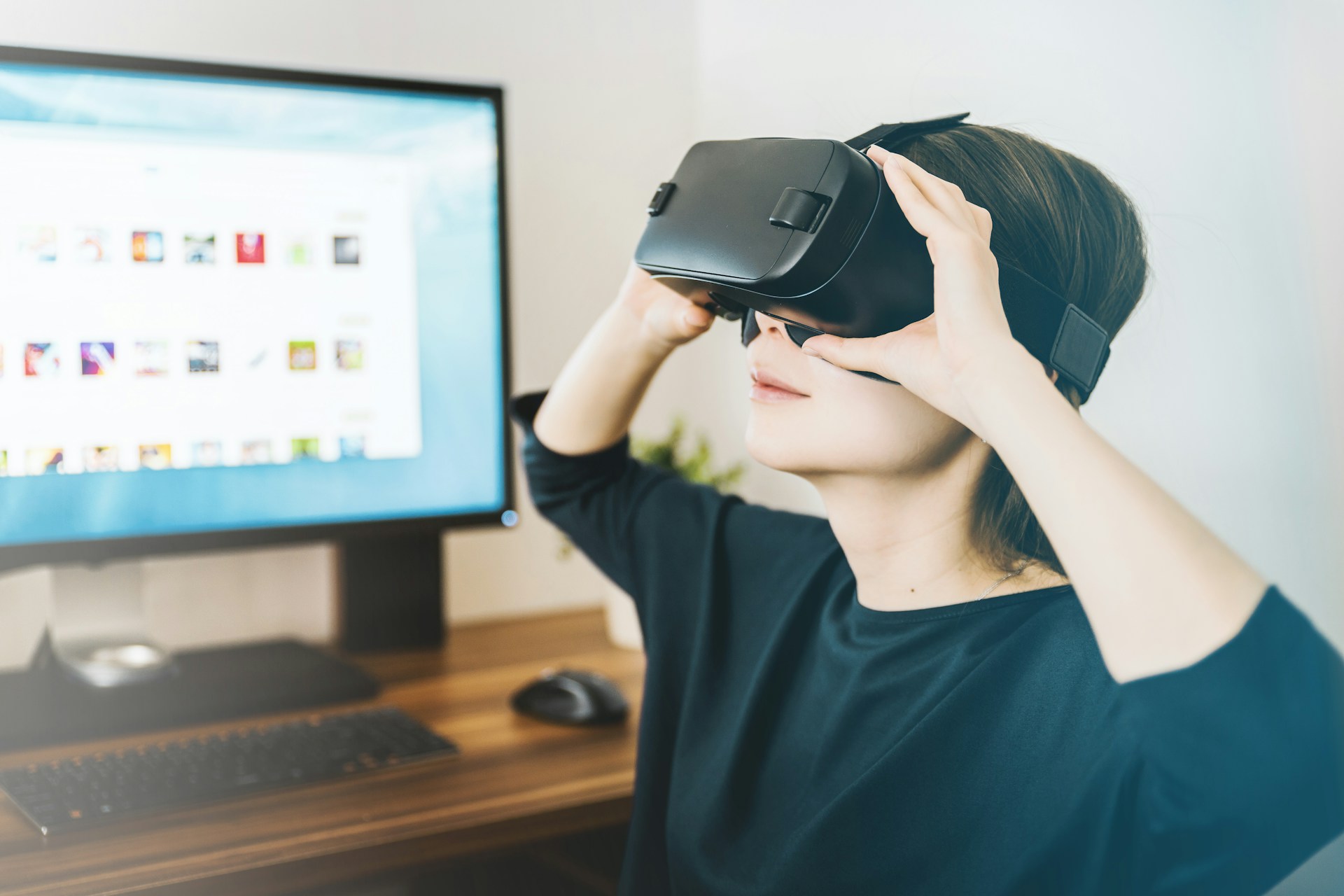
Virtual reality is rapidly moving beyond the realm of gaming and entertainment, finding powerful applications in professional fields like medicine, engineering, and education.
For universities and colleges, this technology offers a new frontier for learning, allowing students to engage with their subjects in ways that were once impossible. By creating realistic, interactive simulations, VR is setting the stage for a more dynamic and effective educational experience.
This shift towards immersive learning is more than just a trend; it represents a fundamental change in how educational content can be delivered and absorbed.
From dissecting a virtual frog in a biology class to walking through ancient historical sites, virtual reality provides hands-on experiences that traditional textbooks and lectures cannot replicate.
This guide will explore the significant impact of VR on higher education, detailing its benefits, applications across different disciplines, and what the future holds for this innovative education technology.
Enhanced Learning Through Immersive Experiences
One of the most significant advantages of virtual reality in education is its ability to create fully immersive learning environments. These digital worlds remove the distractions of a traditional classroom, allowing students to focus completely on the subject matter.
Deepening Engagement
Immersive learning captivates students by making abstract concepts tangible. For example, a medical student can explore the human circulatory system from the inside, or an architecture student can walk through a building they designed before a single brick is laid.
This level of interaction fosters a deeper understanding and improves knowledge retention compared to passive learning methods.
Benefits of Immersion
- Increased Focus: VR headsets block out external stimuli, helping students concentrate on the lesson.
- Active Participation: Instead of just listening or reading, students actively participate in their learning process.
- Emotional Connection: Experiencing scenarios firsthand can create a stronger emotional connection to the material, making it more memorable.
Bridging Theory and Practice Safely
Many fields require hands-on training that can be risky or expensive to provide. Virtual reality offers a solution by allowing students to practice complex procedures and operate sophisticated equipment in a safe, controlled setting.
Training for High-Stakes Professions
Sectors like healthcare and aviation have been early adopters of VR for training purposes. Medical students can perform virtual surgeries, practicing their skills without any risk to real patients. Similarly, aspiring pilots can log hours in a flight simulator, preparing them for real-world flying conditions.
Key Advantages of VR Training
- Risk-Free Environment: Students can make mistakes and learn from them without any real-world consequences.
- Repetition and Mastery: VR simulations can be repeated endlessly, allowing students to practice until they achieve mastery.
- Cost-Effectiveness: It reduces the need for expensive physical equipment and materials.
Making Education More Accessible
Virtual reality has the potential to break down geographical and physical barriers, making high-quality education accessible to a broader audience. This technology can bring the campus experience to students who might not otherwise be able to attend in person.
Remote Learning and Virtual Field Trips
Students from anywhere in the world can attend a virtual lecture, participate in a lab, or go on a field trip to the Amazon rainforest. This is particularly beneficial for students with physical disabilities or those living in remote areas.
Examples of Accessibility
- Virtual Campus Tours: Prospective students can explore a university campus from their own homes.
- Global Classrooms: Institutions can connect students from different countries in a shared virtual space, fostering cross-cultural collaboration.
- Inclusive Labs: Science labs that may be physically inaccessible to some students can be fully experienced through VR.
Fostering Collaboration and Soft Skills
Higher education is not just about academic knowledge; it’s also about developing crucial soft skills like teamwork, communication, and problem-solving. VR is creating new opportunities for students to build these skills in collaborative virtual environments.
Group Projects in a Virtual World
Multi-user VR platforms allow students to meet as avatars in a shared digital space. They can work together on projects, manipulate 3D models, and present their findings as a team, just as they would in a physical classroom.
Skills Developed Through VR
- Teamwork: Students learn to coordinate their efforts and work towards a common goal.
- Communication: Practicing communication in a virtual setting can help build confidence.
- Empathy: Some VR simulations are designed to help students, such as future doctors or social workers, understand the perspectives of others by “walking a mile in their shoes.”
Applications Across Diverse Disciplines
The flexibility of virtual reality means its applications are not limited to a few specific fields. From the arts to the hard sciences, education technology like VR is being integrated into curricula in innovative ways.
Examples by Field of Study
- History and Archaeology: Students can visit ancient Rome or explore the Titanic on the ocean floor.
- Art and Design: Aspiring artists can sculpt and paint in a 3D virtual space without material constraints.
- Engineering: Engineering students can build and test prototypes of machines or structures in a realistic physics-based simulation.
- Biology and Chemistry: Complex molecular structures and biological processes can be visualized and manipulated in three dimensions.
Overcoming the Challenges of Adoption
While the potential of virtual reality is immense, there are challenges to its widespread adoption in higher education. These hurdles include the cost of equipment, the need for specialized content, and the requirement for instructor training.
Navigating the Obstacles
For VR to become a mainstream educational tool, institutions must address these issues. This involves investing in the necessary hardware, partnering with developers to create relevant educational content, and providing faculty with the training they need to integrate VR effectively into their teaching.
Steps Toward Integration
- Strategic Investment: Allocating budget for VR labs and headsets.
- Content Curation: Selecting or developing high-quality, curriculum-aligned VR applications.
- Professional Development: Offering workshops and support for educators.
This kind of large-scale technology rollout isn’t unique to higher education. Industries ranging from logistics to relocation services are undergoing similar digital transformations, replacing fragmented, manual workflows with unified, automation-driven platforms.
For instance, www.edcus.com shows how an entire operational ecosystem, spanning sales, scheduling, documentation, and reporting, can be consolidated into one connected system through built-in AI and automation.
The same principles that make such platforms effective in the moving industry, centralizing data, reducing manual re-entry, and streamlining decision-making, are the ones universities should keep in mind as they build out their own VR adoption roadmaps.
Charting the Course for Immersive Education
Virtual reality is poised to become an integral part of the higher education landscape. By offering immersive, practical, and collaborative learning experiences, this technology is equipping students with the knowledge and skills they need for the future.
As the technology continues to advance and become more accessible, its role in creating more engaging and effective learning environments will only grow. Institutions that embrace this shift will be better prepared to meet the evolving needs of their students and the demands of the 21st-century workforce.
To explore how your institution can begin this journey, start by identifying departments that could immediately benefit from immersive learning and initiate pilot programs. Engaging with VR technology now is the first step toward shaping the future of education.